
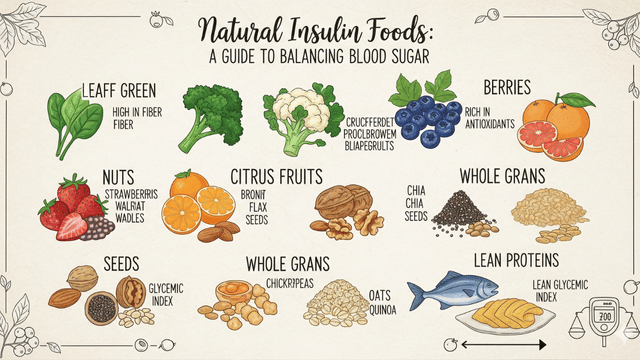
Why Natural Insulin Foods Matter
Having trouble controlling your blood sugar levels naturally? You’re not alone. Diabetes and prediabetes are rising worldwide, and many people are searching for safe, sustainable ways to manage blood sugar without relying solely on medication.
The good news? Mother Nature has already given us foods that support insulin function and help keep sugar levels stable. These natural insulin foods can improve energy, support weight management, and reduce the risk of long-term complications when combined with healthy lifestyle choices.
In this guide, we’ll explore:
- What natural insulin foods are.
- The top 10 foods that help improve insulin sensitivity.
- The benefits of including them daily.
- A sample meal plan featuring these foods.
- Lifestyle habits that enhance your body’s insulin response.
- FAQs about blood sugar management and diet.
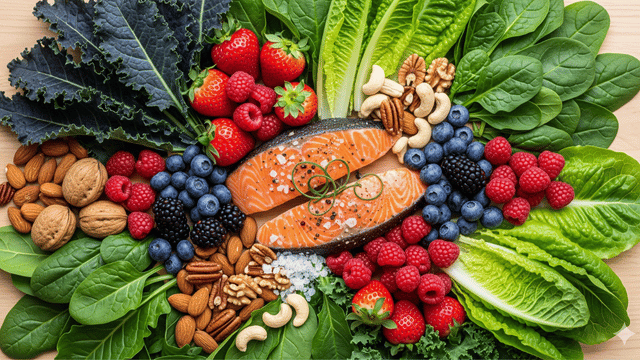
(Image suggestion: A colorful flat lay of leafy greens, berries, nuts, and fish. Alt text: Selection of natural insulin foods that help regulate blood sugar.)
What Are Natural Insulin Foods?
Natural insulin foods are nutrient-dense whole foods that support the body’s ability to produce and use insulin efficiently.
Quick refresher:
- Insulin is a hormone made by your pancreas.
- It helps cells absorb glucose (sugar) for energy or storage.
- When cells become insulin resistant, sugar builds up in the bloodstream — increasing the risk of type 2 diabetes, heart disease, and other complications.
The right foods can:
- Improve insulin sensitivity (how well your body responds to insulin).
- Reduce blood sugar spikes after meals.
- Lower inflammation, which worsens insulin resistance.
(Image suggestion: Infographic of pancreas, insulin, and cells absorbing glucose. Alt text: How insulin helps regulate blood sugar levels in the body.)
Top 10 Natural Insulin Foods You Should Add to Your Diet
Here’s a closer look at the 10 best foods that naturally support insulin function and healthy blood sugar levels.
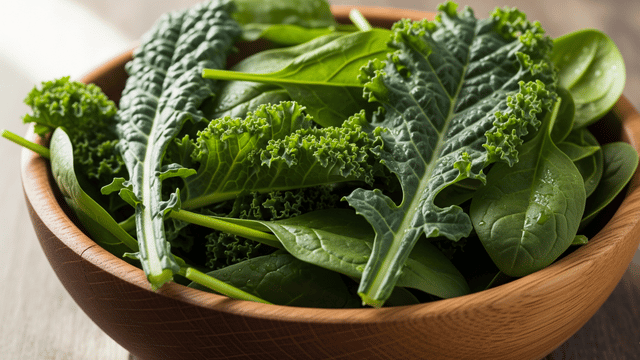
1. Leafy Greens
Examples: Spinach, kale, swiss chard
Benefits:
- High in magnesium, which helps improve insulin sensitivity.
- Rich in fiber, slowing glucose absorption and preventing sugar spikes.
Practical Tip:
Add a handful of spinach to your morning smoothie or prepare a kale salad for lunch.
2. Nuts & Seeds
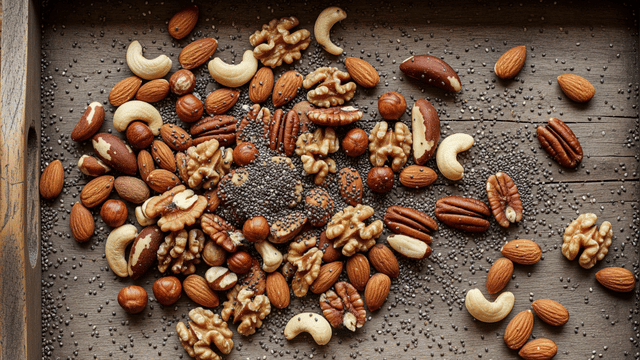
Examples: Almonds, walnuts, chia seeds, flaxseeds
Benefits:
- Packed with healthy fats that slow digestion.
- Provide magnesium and antioxidants, both linked to better insulin response.
- Support satiety, making it easier to manage weight.
Practical Tip:
Snack on a handful of almonds or sprinkle chia seeds over yogurt.
3. Berries
Examples: Blueberries, strawberries, raspberries
Benefits:
- High in polyphenols, which help improve insulin sensitivity.
- Low glycemic index compared to other fruits.
- Packed with fiber, slowing glucose release.
Practical Tip:
Enjoy berries as a dessert alternative or add them to oatmeal.
4. Sweet Potatoes
Benefits:
- Lower glycemic index than white potatoes.
- Release sugar into the bloodstream more slowly, preventing spikes.
- Rich in beta-carotene and fiber.
Practical Tip:
Roast sweet potato wedges with olive oil for a satisfying side dish.
5. Garlic
Benefits:
- Contains compounds that may help lower fasting blood sugar.
- Supports heart health by reducing cholesterol.
- Enhances flavor naturally without added sugar.
Practical Tip:
Add fresh garlic to stir-fries, soups, or salad dressings.
6. Fatty Fish
Examples: Salmon, mackerel, sardines
Benefits:
- Rich in omega-3 fatty acids, which reduce inflammation.
- Support insulin function and heart health.
- High in protein, which helps stabilize blood sugar after meals.
Practical Tip:
Grill salmon and pair it with leafy greens for a blood-sugar-friendly dinner.
7. Whole Grains
Examples: Oats, quinoa, barley, brown rice
Benefits:
- High in fiber and complex carbs that digest slowly.
- Reduce blood sugar spikes compared to refined grains.
- Provide important nutrients like B vitamins and magnesium.
Practical Tip:
Choose oatmeal over sugary cereals or swap white rice for quinoa.
8. Legumes
Examples: Chickpeas, lentils, black beans
Benefits:
- Rich in protein and fiber, keeping you full.
- Help regulate blood sugar after meals.
- Affordable and versatile.
Practical Tip:
Add lentils to soups or make hummus from chickpeas.
9. Apple Cider Vinegar
Benefits:
- May improve insulin sensitivity when consumed before high-carb meals.
- Helps reduce post-meal blood sugar spikes.
Practical Tip:
Dilute 1 tablespoon in water and drink before meals, or use in salad dressings.
(Note: Always consult a doctor before long-term use if you have digestive issues.)
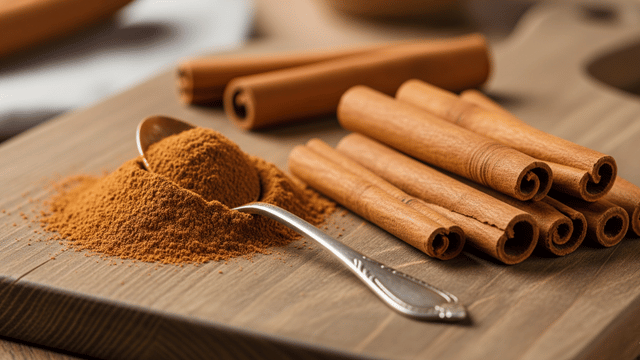
10. Cinnamon
Benefits:
- Contains bioactive compounds that can mimic insulin.
- May help cells absorb glucose more effectively.
Practical Tip:
Sprinkle cinnamon on oatmeal, yogurt, or coffee instead of sugar.
Benefits of Eating Natural Insulin Foods
Including these foods daily can bring numerous benefits:
- Supports healthy blood sugar levels.
- Enhances insulin sensitivity.
- Promotes weight management.
- Reduces inflammation and oxidative stress.
- Supports heart health and lowers the risk of diabetes complications

Simple Meal Plan Featuring Natural Insulin Foods
Here’s how to build a day of meals featuring natural insulin-friendly foods:
| Meal | Natural Insulin Foods Included |
|---|---|
| Breakfast | Oats, chia seeds, cinnamon, berries |
| Lunch | Leafy greens, chickpeas, quinoa |
| Snack | Almonds, walnuts, cucumber |
| Dinner | Grilled salmon, sweet potatoes, steamed broccoli |
Lifestyle Tips to Boost Natural Insulin Response
- Food is powerful, but it works even better with the right lifestyle choices:
- Stay Active: Exercise helps muscles absorb glucose efficiently.
- Get Quality Sleep: Aim for 7–8 hours to avoid worsening insulin resistance.
- Manage Stress: Chronic stress hormones can spike blood sugar.
- Stay Hydrated: Water helps kidneys flush out excess sugar.
- Practice Mindful Eating: Slow down meals to allow insulin regulation.
FAQs About Natural Insulin Foods
Can natural insulin foods replace diabetes medication?
No. These foods support healthy blood sugar but should not replace prescribed treatment. Always consult your doctor before making major changes.
How long does it take to see results?
Some people notice improvements in energy and reduced cravings within weeks, but long-term benefits build over months.
Can I still eat carbs?
Yes! Focus on complex carbs like whole grains and legumes instead of refined carbs like white bread or pastries.
Are fruits safe for people with diabetes?
Most fruits are safe in moderation, especially low-glycemic fruits like berries and apples. Pairing them with protein (like nuts) helps balance blood sugar.
Should I take cinnamon or apple cider vinegar supplements?
Whole foods are best. If you’re considering supplements, consult your healthcare provider first.
Final Thoughts
Balancing blood sugar doesn’t have to be complicated. By including natural insulin foods like leafy greens, berries, whole grains, and fatty fish, you give your body the tools it needs to manage glucose more effectively.
When combined with exercise, quality sleep, and stress management, these foods can help you feel more energetic, maintain a healthy weight, and reduce future health risks.

Suggested Reads
Gut Health Connection: How Your Stomach Affects Your Mood & Skin
How to Sleep Better Naturally Without Pills
Heart Attack Signs in Women: How They Differ from Men
Bio of the Author
Azad is the creator of Kitchen Made Health, a website devoted to home cures, natural wellness, and healthy living. He is committed to helping readers live better lives by fusing conventional wisdom with cutting-edge nutrition science.
Disclaimer:
The information on Kitchen Made Health is provided for educational and informational purposes only and is not intended as medical advice.
Always consult with a qualified healthcare professional before making any changes to your diet, supplements, exercise routine, or lifestyle — especially if you have an existing medical condition, take prescription medications, or are pregnant or breastfeeding.
The content shared here reflects general wellness knowledge and should not be used to diagnose, treat, or cure any disease.
Results may vary from person to person. If you experience any unusual symptoms or health concerns, please seek immediate medical attention.


